 Gita Guide
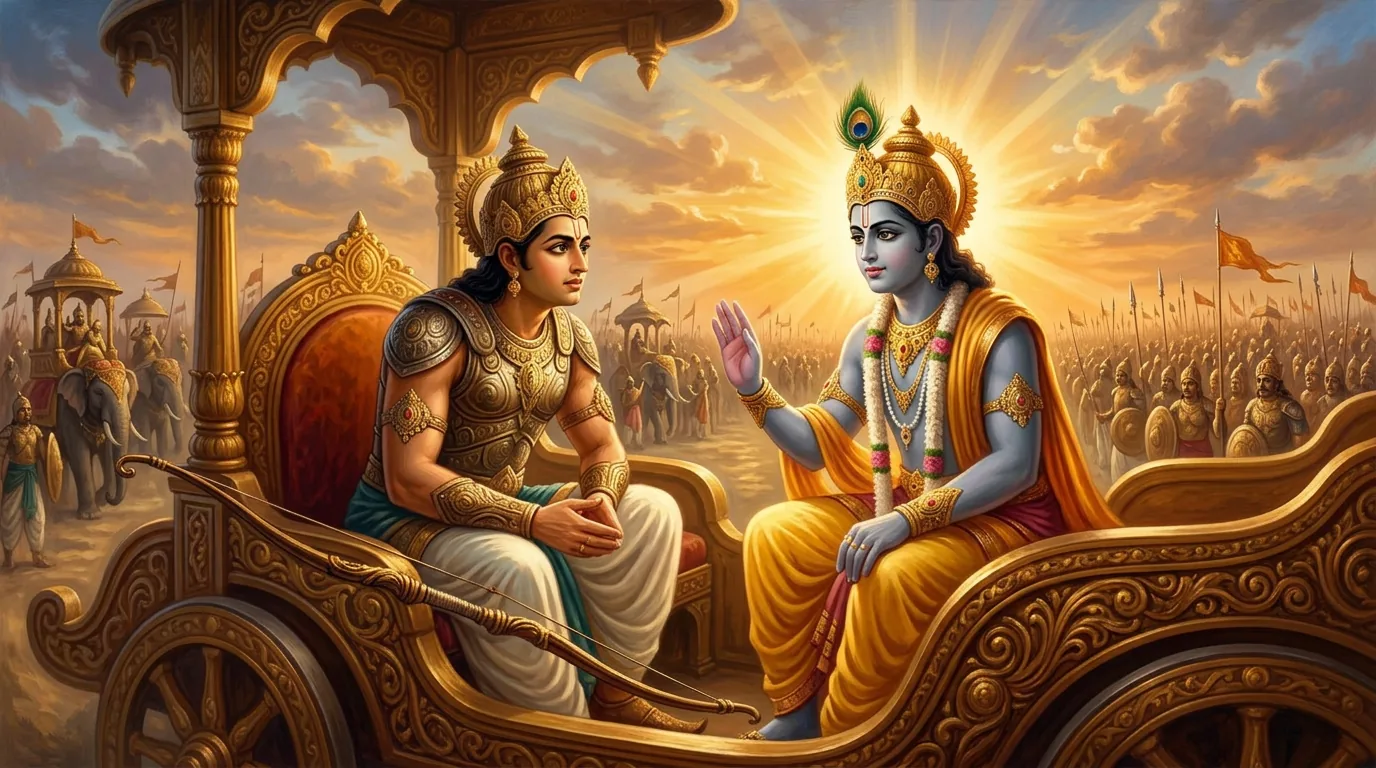
The Bhagavad Gita quote most people need first is BG 2.47: you have a right to your work, but not to its results. Below are 24 shlokas grouped by the feeling you have right now, each with Sanskrit, English and chapter and verse.
कर्मण्येवाधिकारस्ते मा फलेषु कदाचन ।
मा कर्मफलहेतुर्भूर्मा ते सङ्गोऽस्त्वकर्मणि ॥ 47 ॥
karmaṇy-evādhikāras te mā phaleṣhu kadāchana
mā karma-phala-hetur bhūr mā te saṅgo 'stvakarmaṇi
Your right is to the work you are meant to do, never to its fruits. Do not see yourself as the cause of the results, and do not become attached to inaction either.
Bhagavad Gita 2.47
Every quote on this page comes with its chapter and verse, so you can look it up in any edition. The groupings follow the feeling-to-shloka map inside the Gita Guide app, which matches 661 of the Gita's 700 shlokas to 8 feelings.
Which 10 shlokas should you read first?
There is no official top ten. These ten are widely known, short enough to remember, and each one answers a feeling most of us meet every week:
- BG 2.47 on doing the work and letting go of the result
- BG 2.48 on staying even in success and failure
- BG 2.63 on where anger leads
- BG 6.5 on the mind as friend or enemy
- BG 6.35 on calming a restless mind
- BG 3.35 on following your own path
- BG 18.66 on letting go of fear
- BG 2.20 on what does not die
- BG 2.22 on change, like changing clothes
- BG 2.70 on the ocean that stays full
Bhagavad Gita quotes for anxiety and stress
Most anxiety is about results we cannot control yet. These three shlokas move your attention back to the part that is yours. For more, read 9 shlokas for an anxious mind.
BG 2.47: do the work, release the result
कर्मण्येवाधिकारस्ते मा फलेषु कदाचन ।
मा कर्मफलहेतुर्भूर्मा ते सङ्गोऽस्त्वकर्मणि ॥ 47 ॥
karmaṇy-evādhikāras te mā phaleṣhu kadāchana
mā karma-phala-hetur bhūr mā te saṅgo 'stvakarmaṇi
Your right is to the work you are meant to do, never to its fruits. Do not see yourself as the cause of the results, and do not become attached to inaction either.
Bhagavad Gita 2.47
Read it before an exam, an interview or a hard conversation. It does not tell you to stop caring. It tells you where your control ends.
BG 2.48: stay even in success and failure
योगस्थ: कुरु कर्माणि सङ्गं त्यक्त्वा धनञ्जय ।
सिद्ध्यसिद्ध्यो: समो भूत्वा समत्वं योग उच्यते ॥ 48 ॥
yoga-sthaḥ kuru karmāṇi saṅgaṁ tyaktvā dhanañjaya
siddhy-asiddhyoḥ samo bhūtvā samatvaṁ yoga uchyate
Stay firm in doing your duty, O Arjun, and give up attachment to success and failure. This evenness of mind is called Yog.
Bhagavad Gita 2.48
Krishna calls this evenness yoga. When a result goes badly, this is the shloka for the next morning.
BG 2.56: the mind that misery cannot shake
दु:खेष्वनुद्विग्नमना: सुखेषु विगतस्पृह: ।
वीतरागभयक्रोध: स्थितधीर्मुनिरुच्यते ॥ 56 ॥
duḥkheṣhv-anudvigna-manāḥ sukheṣhu vigata-spṛihaḥ
vīta-rāga-bhaya-krodhaḥ sthita-dhīr munir uchyate
One whose mind stays undisturbed in sorrow, who does not crave pleasure, and who is free from attachment, fear and anger, is called a sage of steady wisdom.
Bhagavad Gita 2.56
A description of the person you are trying to become: not untouched by pain, but not run by it either.
Bhagavad Gita quotes on anger
The Gita treats anger as the end of a chain, not a sudden event. Seeing the chain is the first way out of it.
BG 2.62: how anger starts
ध्यायतो विषयान्पुंस: सङ्गस्तेषूपजायते ।
सङ्गात्सञ्जायते काम: कामात्क्रोधोऽभिजायते ॥ 62 ॥
dhyāyato viṣhayān puṁsaḥ saṅgas teṣhūpajāyate
saṅgāt sañjāyate kāmaḥ kāmāt krodho 'bhijāyate
When a person keeps thinking about the objects of the senses, attachment to them grows. From attachment comes desire, and from desire comes anger.
Bhagavad Gita 2.62
BG 2.63: what anger costs
क्रोधाद्भवति सम्मोह: सम्मोहात्स्मृतिविभ्रम: ।
स्मृतिभ्रंशाद् बुद्धिनाशो बुद्धिनाशात्प्रणश्यति ॥ 63 ॥
krodhād bhavati sammohaḥ sammohāt smṛiti-vibhramaḥ
smṛiti-bhranśhād buddhi-nāśho buddhi-nāśhāt praṇaśhyati
Anger clouds judgment, and clouded judgment confuses the memory. When memory is confused, the intellect is lost; and when the intellect is lost, a person is ruined.
Bhagavad Gita 2.63
Read 2.62 and 2.63 together. They trace a straight line from what you keep thinking about to losing your judgment. The useful part is the start of the line: what you keep thinking about.
BG 16.21: the three gates
त्रिविधं नरकस्येदं द्वारं नाशनमात्मन: ।
काम: क्रोधस्तथा लोभस्तस्मादेतत्त्रयं त्यजेत् ॥ 21 ॥
tri-vidhaṁ narakasyedaṁ dvāraṁ nāśhanam ātmanaḥ
kāmaḥ krodhas tathā lobhas tasmād etat trayaṁ tyajet
Three gates lead the soul to the hell of self-destruction: lust, anger and greed. So one should give up all three.
Bhagavad Gita 16.21
Bhagavad Gita quotes on overthinking and a restless mind
Arjun says out loud what most of us feel at 1 AM with a phone in hand: the mind will not sit still. Krishna agrees, then gives the method.
BG 6.34: the mind is harder to hold than the wind
चञ्चलं हि मन: कृष्ण प्रमाथि बलवद्दृढम् ।
तस्याहं निग्रहं मन्ये वायोरिव सुदुष्करम् ॥ 34 ॥
chañchalaṁ hi manaḥ kṛiṣhṇa pramāthi balavad dṛiḍham
tasyāhaṁ nigrahaṁ manye vāyor iva su-duṣhkaram
O Krishna, the mind is restless, stormy, powerful and stubborn. It seems to me harder to control than the wind.
Bhagavad Gita 6.34
BG 6.35: practice and detachment
श्रीभगवानुवाच ।
असंशयं महाबाहो मनो दुर्निग्रहं चलम् ।
अभ्यासेन तु कौन्तेय वैराग्येण च गृह्यते ॥ 35 ॥
śhrī bhagavān uvācha
asanśhayaṁ mahā-bāho mano durnigrahaṁ chalam
abhyāsena tu kaunteya vairāgyeṇa cha gṛihyate
Lord Krishna said: O mighty-armed son of Kunti, what you say is correct; the mind is truly hard to restrain. But it can be brought under control through practice and detachment.
Bhagavad Gita 6.35
Notice that Krishna does not argue. He accepts the problem and gives two tools: practice, which means returning again and again, and detachment, which means wanting less from each thought.
BG 6.26: bring it back, every time
यतो यतो निश्चरति मनश्चञ्चलमस्थिरम् ।
ततस्ततो नियम्यैतदात्मन्येव वशं नयेत् ॥ 26 ॥
yato yato niśhcharati manaśh chañchalam asthiram
tatas tato niyamyaitad ātmanyeva vaśhaṁ nayet
Wherever and whenever the restless, unsteady mind wanders off, bring it back and keep it fixed on God.
Bhagavad Gita 6.26
This is the practice from 6.35 in one line. The mind wanders; you bring it back. Wandering is not failure. Not returning is.
Which shloka helps when you feel lost or can't decide?
The whole Gita begins with a man who cannot decide what to do. These shlokas come from that moment and from Krishna's answer to it.
BG 2.7: asking for help
कार्पण्यदोषोपहतस्वभाव:
पृच्छामि त्वां धर्मसम्मूढचेता: ।
यच्छ्रेय: स्यान्निश्चितं ब्रूहि तन्मे
शिष्यस्तेऽहं शाधि मां त्वां प्रपन्नम् ॥ 7 ॥
kārpaṇya-doṣhopahata-svabhāvaḥ
pṛichchhāmi tvāṁ dharma-sammūḍha-chetāḥ
yach-chhreyaḥ syānniśhchitaṁ brūhi tanme
śhiṣhyaste 'haṁ śhādhi māṁ tvāṁ prapannam
I am confused about my duty and overcome by anxiety and weakness of heart. I am Your disciple and I take refuge in You. Please tell me clearly what is best for me.
Bhagavad Gita 2.7
Arjun's turning point is admitting he is confused. If you cannot decide, saying so plainly is a real first step.
BG 3.35: your own path, even imperfectly
श्रेयान्स्वधर्मो विगुण: परधर्मात्स्वनुष्ठितात् ।
स्वधर्मे निधनं श्रेय: परधर्मो भयावह: ॥ 35 ॥
śhreyān swa-dharmo viguṇaḥ para-dharmāt sv-anuṣhṭhitāt
swa-dharme nidhanaṁ śhreyaḥ para-dharmo bhayāvahaḥ
It is far better to do your own natural duty, even with faults, than to do another's duty perfectly. It is better to die doing your own duty than to follow another's path, which is full of danger.
Bhagavad Gita 3.35
BG 18.47: the same advice, at the end of the Gita
श्रेयान्स्वधर्मो विगुण: परधर्मात्स्वनुष्ठितात् ।
स्वभावनियतं कर्म कुर्वन्नाप्नोति किल्बिषम् ॥ 47 ॥
śhreyān swa-dharmo viguṇaḥ para-dharmāt sv-anuṣhṭhitāt
svabhāva-niyataṁ karma kurvan nāpnoti kilbiṣham
It is better to follow your own dharma, even imperfectly, than another's dharma, even perfectly. One who does the duty born of their own nature does not incur sin.
Bhagavad Gita 18.47
Krishna gives this advice twice, in chapter 3 and again near the very end. A path that is truly yours, walked imperfectly, beats a borrowed one walked well.
Bhagavad Gita quotes for fear and guilt
BG 18.66: do not fear
सर्वधर्मान्परित्यज्य मामेकं शरणं व्रज ।
अहं त्वां सर्वपापेभ्यो मोक्षयिष्यामि मा शुच: ॥ 66 ॥
sarva-dharmān parityajya mām ekaṁ śharaṇaṁ vraja
ahaṁ tvāṁ sarva-pāpebhyo mokṣhayiṣhyāmi mā śhuchaḥ
Set aside every other kind of dharma and take refuge in Me alone. I will free you from all sinful reactions; do not fear.
Bhagavad Gita 18.66
Krishna says this near the end of the last chapter, after everything else has been taught. It ends with two words worth keeping: do not fear.
BG 4.36: no one is beyond knowledge
अपि चेदसि पापेभ्य: सर्वेभ्य: पापकृत्तम: ।
सर्वं ज्ञानप्लवेनैव वृजिनं सन्तरिष्यसि ॥ 36 ॥
api ched asi pāpebhyaḥ sarvebhyaḥ pāpa-kṛit-tamaḥ
sarvaṁ jñāna-plavenaiva vṛijinaṁ santariṣhyasi
Even those thought to be the worst of all sinners can cross this ocean of worldly existence by boarding the boat of divine knowledge.
Bhagavad Gita 4.36
BG 9.30: the right resolve
अपि चेत्सुदुराचारो भजते मामनन्यभाक् ।
साधुरेव स मन्तव्य: सम्यग्व्यवसितो हि स: ॥ 30 ॥
api chet su-durāchāro bhajate mām ananya-bhāk
sādhur eva sa mantavyaḥ samyag vyavasito hi saḥ
Even if the worst sinner worships Me with undivided devotion, that person should be seen as righteous, for they have made the right resolve.
Bhagavad Gita 9.30
Guilt looks backwards. Both of these shlokas look at the decision you make now.
Bhagavad Gita quotes for when you feel alone or in conflict
BG 9.29: you are not left out
समोऽहं सर्वभूतेषु न मे द्वेष्योऽस्ति न प्रिय: ।
ये भजन्ति तु मां भक्त्या मयि ते तेषु चाप्यहम् ॥ 29 ॥
samo 'haṁ sarva-bhūteṣhu na me dveṣhyo 'sti na priyaḥ
ye bhajanti tu māṁ bhaktyā mayi te teṣhu chāpyaham
I am the same toward all beings; I am neither hostile nor partial to anyone. But those who worship Me with love live in Me, and I live in them.
Bhagavad Gita 9.29
BG 6.32: other people's joy and sorrow as your own
आत्मौपम्येन सर्वत्र समं पश्यति योऽर्जुन ।
सुखं वा यदि वा दु:खं स योगी परमो मत: ॥ 32 ॥
ātmaupamyena sarvatra samaṁ paśhyati yo 'rjuna
sukhaṁ vā yadi vā duḥkhaṁ sa yogī paramo mataḥ
I consider them perfect yogis who see all beings as truly equal and feel the joys and sorrows of others as if they were their own.
Bhagavad Gita 6.32
In a conflict, this is the hardest shloka to practice and the most useful one: feel the other person's side as if it were yours.
BG 12.13-14: free from malice, ever-forgiving
अद्वेष्टा सर्वभूतानां मैत्र: करुण एव च ।
निर्ममो निरहङ्कार: समदु:खसुख: क्षमी ॥ 13 ॥
सन्तुष्ट: सततं योगी यतात्मा दृढनिश्चय: ।
मय्यर्पितमनोबुद्धिर्यो मद्भक्त: स मे प्रिय: ॥ 14 ॥
adveṣhṭā sarva-bhūtānāṁ maitraḥ karuṇa eva cha
nirmamo nirahankāraḥ sama-duḥkha-sukhaḥ kṣhamī
santuṣhṭaḥ satataṁ yogī yatātmā dṛiḍha-niśhchayaḥ
mayy arpita-mano-buddhir yo mad-bhaktaḥ sa me priyaḥ
Those devotees are very dear to Me who bear no malice toward any being, who are friendly and compassionate, free from possessiveness and ego, the same in happiness and distress, and ever-forgiving. They are always content, steadily united with Me in devotion, self-controlled, firm in resolve, and have given their mind and intellect to Me.
Bhagavad Gita 12.13-14
Bhagavad Gita quotes for grief and loss
Chapter 2 opens with Arjun in grief. Krishna's first teaching is about what does not end.
BG 2.13: childhood, youth, old age, and beyond
देहिनोऽस्मिन्यथा देहे कौमारं यौवनं जरा ।
तथा देहान्तरप्राप्तिर्धीरस्तत्र न मुह्यति ॥ 13 ॥
dehino 'smin yathā dehe kaumāraṁ yauvanaṁ jarā
tathā dehāntara-prāptir dhīras tatra na muhyati
Just as the soul within the body passes from childhood to youth to old age, in the same way, at death, it passes into another body. The wise are not confused by this.
Bhagavad Gita 2.13
BG 2.20: never born, never dying
न जायते म्रियते वा कदाचि
नायं भूत्वा भविता वा न भूय: ।
अजो नित्य: शाश्वतोऽयं पुराणो
न हन्यते हन्यमाने शरीरे ॥ 20 ॥
na jāyate mriyate vā kadāchin
nāyaṁ bhūtvā bhavitā vā na bhūyaḥ
ajo nityaḥ śhāśhvato 'yaṁ purāṇo
na hanyate hanyamāne śharīre
The soul is never born and never dies; having once existed, it never stops being. It is unborn, eternal, immortal and ageless. It is not destroyed when the body is destroyed.
Bhagavad Gita 2.20
BG 2.22: like changing clothes
वासांसि जीर्णानि यथा विहाय
नवानि गृह्णाति नरोऽपराणि ।
तथा शरीराणि विहाय जीर्णा
न्यन्यानि संयाति नवानि देही ॥ 22 ॥
vāsānsi jīrṇāni yathā vihāya
navāni gṛihṇāti naro 'parāṇi
tathā śharīrāṇi vihāya jīrṇānya
nyāni sanyāti navāni dehī
Just as a person puts away worn-out clothes and puts on new ones, so at death the soul leaves its worn-out body and enters a new one.
Bhagavad Gita 2.22
Bhagavad Gita quotes for peace and contentment
BG 2.70: the ocean that stays full
आपूर्यमाणमचलप्रतिष्ठं
समुद्रमाप: प्रविशन्ति यद्वत् ।
तद्वत्कामा यं प्रविशन्ति सर्वे
स शान्तिमाप्नोति न कामकामी ॥ 70 ॥
āpūryamāṇam achala-pratiṣhṭhaṁ
samudram āpaḥ praviśhanti yadvat
tadvat kāmā yaṁ praviśhanti sarve
sa śhāntim āpnoti na kāma-kāmī
Just as the ocean stays undisturbed though rivers keep pouring into it, the sage who is unmoved by the stream of desirable things all around finds peace, not the person who keeps trying to satisfy desires.
Bhagavad Gita 2.70
Rivers keep flowing in and the ocean does not rise. Peace here is not getting what you want. It is not being moved by every want.
BG 2.65: peace in which sorrows end
प्रसादे सर्वदु:खानां हानिरस्योपजायते ।
प्रसन्नचेतसो ह्याशु बुद्धि: पर्यवतिष्ठते ॥ 65 ॥
prasāde sarva-duḥkhānāṁ hānir asyopajāyate
prasanna-chetaso hyāśhu buddhiḥ paryavatiṣhṭhate
Through divine grace comes the peace in which all sorrows end, and the intellect of such a calm-minded person soon becomes firmly settled in God.
Bhagavad Gita 2.65
BG 6.5: the mind as friend or enemy
उद्धरेदात्मनात्मानं नात्मानमवसादयेत् ।
आत्मैव ह्यात्मनो बन्धुरात्मैव रिपुरात्मन: ॥ 5 ॥
uddhared ātmanātmānaṁ nātmānam avasādayet
ātmaiva hyātmano bandhur ātmaiva ripur ātmanaḥ
Lift yourself up by the power of your own mind, and do not drag yourself down, for the mind can be your friend and also your enemy.
Bhagavad Gita 6.5
How do you keep one of these shlokas in front of you?
Reading a good shloka once is easy. Remembering it at the moment you need it is the hard part. That moment is often when you pick up your phone.
Gita Guide is an app built around that moment. Here is how it works: when you open an app you have chosen to lock, like Instagram or YouTube, it asks how you feel, shows a shloka matched to that feeling, and opens your app after you read it. You can also pin your favourite shloka to your home screen, where it stays until you choose another, or download the app for Android or iPhone.
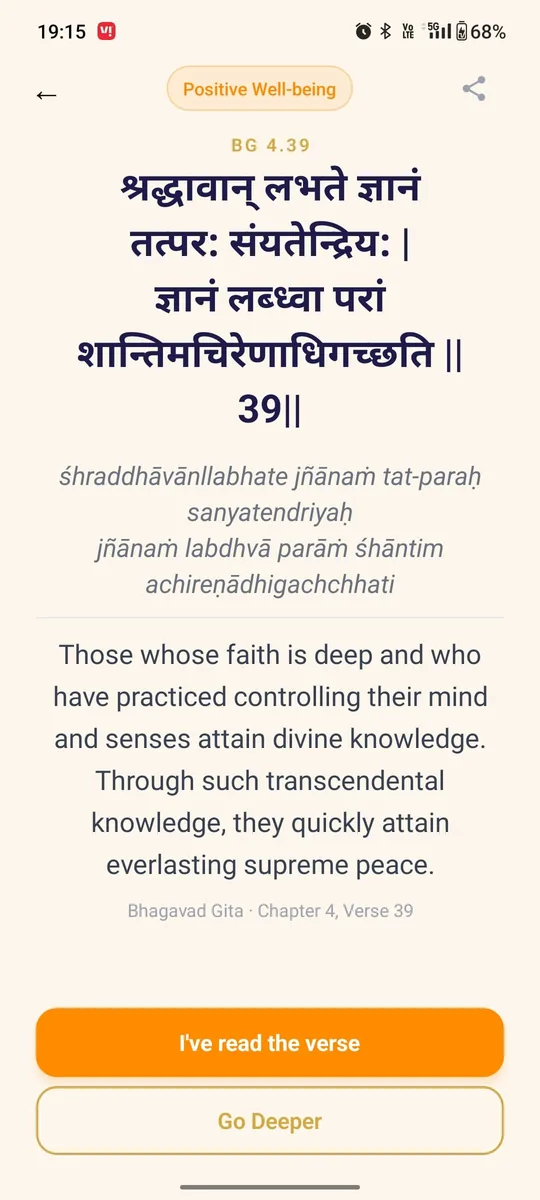
Gita Guide is on Android and iPhone. The yearly plan starts with a 7-day free trial; the home screen widget is free.
Get it on Google Play Download on the App StoreQuestions about Bhagavad Gita quotes
What does the Bhagavad Gita teach?
It teaches how to act well without being ruled by the results: do your duty, keep an even mind in success and failure, and steady the mind through practice. It is a 700-shloka conversation between Arjun and Krishna, set in the Mahabharata on the eve of a war.
What is the most powerful quote in the Bhagavad Gita?
Many readers choose BG 2.47, on working without attachment to results, or BG 18.66, which ends with "do not fear". Which one is most powerful for you depends on what you are going through, which is why this page is grouped by feeling.
Is "do your karma and don't worry about the result" from the Gita?
It is a popular paraphrase of BG 2.47. The verse says you have a right to your actions but not to their fruits, and it adds a warning people often leave out: do not become attached to inaction either.
How these shlokas were chosen: each group uses shlokas that the Gita Guide app shows for that feeling. Shloka selection in the app is reviewed with Gita teachers.
Last updated 23 November 2026. Spotted a mistake in a shloka, translation or reference? Email info@adwiz.in and we will correct it.