 Gita Guide
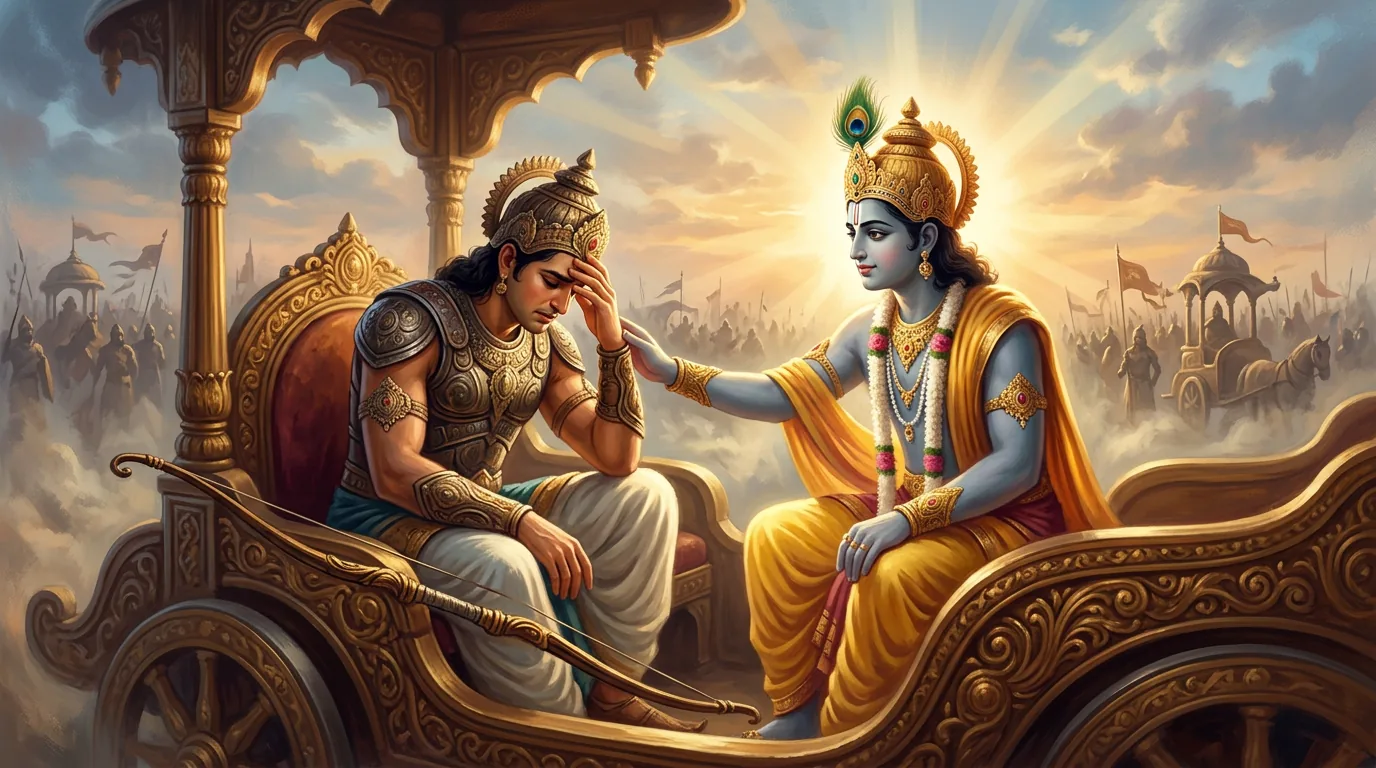
The Bhagavad Gita's main advice for anxiety is BG 2.47: give your full effort to the work in front of you, and let go of the result you cannot control. Below are 9 shlokas for an anxious mind, each with Sanskrit, English and chapter and verse.
कर्मण्येवाधिकारस्ते मा फलेषु कदाचन ।
मा कर्मफलहेतुर्भूर्मा ते सङ्गोऽस्त्वकर्मणि ॥ 47 ॥
karmaṇy-evādhikāras te mā phaleṣhu kadāchana
mā karma-phala-hetur bhūr mā te saṅgo 'stvakarmaṇi
Your right is to the work you are meant to do, never to its fruits. Do not see yourself as the cause of the results, and do not become attached to inaction either.
Bhagavad Gita 2.47
These are shlokas the Gita Guide app shows when someone picks "Stress & Overwhelm" as the feeling they have right now. For quotes on every other feeling, see Bhagavad Gita quotes for every feeling.
If you only have a minute
The Gita opens with a panic attack
Before any teaching, the Gita describes anxiety in the body. Arjun looks at the battlefield and his body gives way.
BG 1.28: my limbs are giving way
अर्जुन उवाच ।
दृष्ट्वेमं स्वजनं कृष्ण युयुत्सुं समुपस्थितम् ॥ 28 ॥
सीदन्ति मम गात्राणि मुखं च परिशुष्यति ।
arjuna uvācha
dṛiṣhṭvemaṁ sva-janaṁ kṛiṣhṇa yuyutsuṁ samupasthitam
sīdanti mama gātrāṇi mukhaṁ cha pariśhuṣhyati
Arjun said: O Krishna, seeing my own relatives gathered here for battle, ready to kill one another, my limbs are giving way and my mouth is going dry.
Bhagavad Gita 1.28
BG 1.30: my mind is whirling
वेपथुश्च शरीरे मे रोमहर्षश्च जायते ॥ 29 ॥
गाण्डीवं स्रंसते हस्तात्त्वक्चै व परिदह्यते ।
न च शक्नोम्यवस्थातुं भ्रमतीव च मे मन: ॥ 30 ॥
निमित्तानि च पश्यामि विपरीतानि केशव ।
न च श्रेयोऽनुपश्यामि हत्वा स्वजनमाहवे ॥ 31 ॥
vepathuśh cha śharīre me roma-harṣhaśh cha jāyate
gāṇḍīvaṁ sraṁsate hastāt tvak chaiva paridahyate
na cha śhaknomy avasthātuṁ bhramatīva cha me manaḥ
nimittāni cha paśhyāmi viparītāni keśhava
na cha śhreyo 'nupaśhyāmi hatvā sva-janam āhave
My whole body trembles and my hair stands on end. My bow, the Gandiv, is slipping from my hand, and my skin burns all over. My mind is whirling in confusion; I can no longer hold myself steady. O Krishna, slayer of the demon Keshi, I see only signs of misfortune. I cannot see how any good can come from killing my own kin in this battle.
Bhagavad Gita 1.30
Shaking hands, a dry mouth, burning skin, a mind that will not hold still. If you have felt this before an exam, a hospital visit or a hard phone call, you are in good company. The whole Gita is Krishna's answer to this moment, and he does not begin by telling Arjun the feeling is fake.
Shlokas for anxiety about results
Most anxiety is about a result that has not happened yet. These two shlokas move your attention back to the part that is yours.
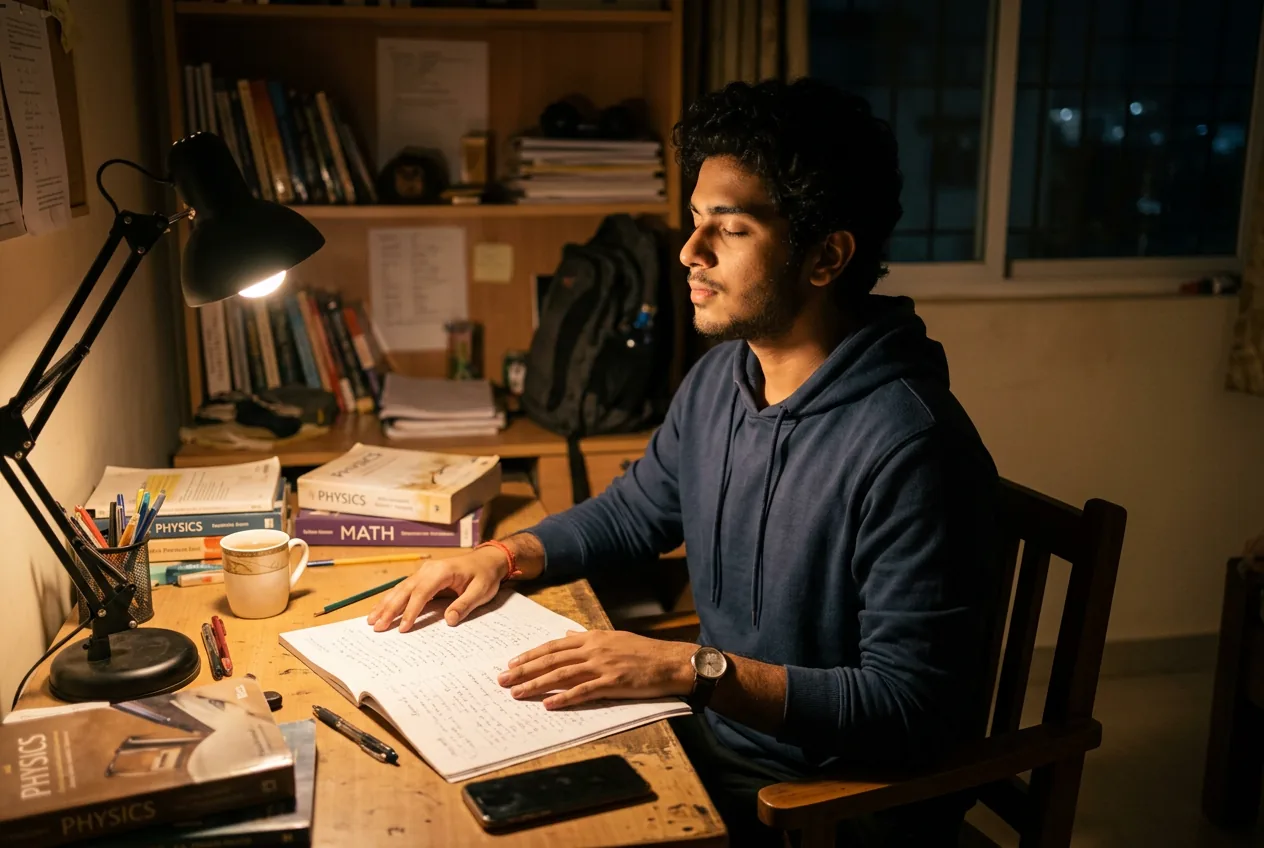
BG 2.47: the work is yours, the result is not
Read the full shloka above again. People quote the first half, "you have a right to your actions, not to their fruits". The second half matters as much: do not become attached to inaction either.
The Gita is not telling you to stop caring or stop trying. It is telling you where your control ends.
BG 2.48: stay even in success and failure
योगस्थ: कुरु कर्माणि सङ्गं त्यक्त्वा धनञ्जय ।
सिद्ध्यसिद्ध्यो: समो भूत्वा समत्वं योग उच्यते ॥ 48 ॥
yoga-sthaḥ kuru karmāṇi saṅgaṁ tyaktvā dhanañjaya
siddhy-asiddhyoḥ samo bhūtvā samatvaṁ yoga uchyate
Stay firm in doing your duty, O Arjun, and give up attachment to success and failure. This evenness of mind is called Yog.
Bhagavad Gita 2.48
Krishna calls this evenness yoga. It is a skill, which means it can be practiced. When a result goes badly, this is the shloka for the next morning.
Shlokas for when the feeling will not pass
BG 2.14: it comes and goes like the seasons
मात्रास्पर्शास्तु कौन्तेय शीतोष्णसुखदु:खदा: ।
आगमापायिनोऽनित्यास्तांस्तितिक्षस्व भारत ॥ 14 ॥
mātrā-sparśhās tu kaunteya śhītoṣhṇa-sukha-duḥkha-dāḥ
āgamāpāyino 'nityās tāns-titikṣhasva bhārata
O son of Kunti, when the senses meet their objects, passing feelings of pleasure and pain arise. They do not last; they come and go like winter and summer. O descendant of Bharat, learn to bear them without being shaken.
Bhagavad Gita 2.14
Anxiety tells you this feeling is permanent. This shloka says the opposite: pleasant and unpleasant feelings come and go like winter and summer. You are asked to bear them, not to make them disappear.
BG 2.56: the steady mind
दु:खेष्वनुद्विग्नमना: सुखेषु विगतस्पृह: ।
वीतरागभयक्रोध: स्थितधीर्मुनिरुच्यते ॥ 56 ॥
duḥkheṣhv-anudvigna-manāḥ sukheṣhu vigata-spṛihaḥ
vīta-rāga-bhaya-krodhaḥ sthita-dhīr munir uchyate
One whose mind stays undisturbed in sorrow, who does not crave pleasure, and who is free from attachment, fear and anger, is called a sage of steady wisdom.
Bhagavad Gita 2.56
This describes the person you are trying to become. Not someone who never feels misery, but someone whose mind is not thrown by it. Notice that fear is on the list of things this person is free from.
Shlokas for when your mind races
BG 6.35: practice and detachment
श्रीभगवानुवाच ।
असंशयं महाबाहो मनो दुर्निग्रहं चलम् ।
अभ्यासेन तु कौन्तेय वैराग्येण च गृह्यते ॥ 35 ॥
śhrī bhagavān uvācha
asanśhayaṁ mahā-bāho mano durnigrahaṁ chalam
abhyāsena tu kaunteya vairāgyeṇa cha gṛihyate
Lord Krishna said: O mighty-armed son of Kunti, what you say is correct; the mind is truly hard to restrain. But it can be brought under control through practice and detachment.
Bhagavad Gita 6.35
Krishna agrees that the mind is hard to restrain. He does not argue with Arjun. He gives two tools: practice, which means coming back again and again, and detachment, which means asking less from each thought.
Shlokas for fear and worry
BG 12.15: free from fear and anxiety
यस्मान्नोद्विजते लोको लोकान्नोद्विजते च य: ।
हर्षामर्षभयोद्वेगैर्मुक्तो य: स च मे प्रिय: ॥ 15 ॥
yasmān nodvijate loko lokān nodvijate cha yaḥ
harṣhāmarṣha-bhayodvegair mukto yaḥ sa cha me priyaḥ
Those who trouble no one and are troubled by no one, who stay the same in pleasure and pain, and who are free from fear and anxiety, such devotees are very dear to Me.
Bhagavad Gita 12.15
BG 18.66: do not fear
सर्वधर्मान्परित्यज्य मामेकं शरणं व्रज ।
अहं त्वां सर्वपापेभ्यो मोक्षयिष्यामि मा शुच: ॥ 66 ॥
sarva-dharmān parityajya mām ekaṁ śharaṇaṁ vraja
ahaṁ tvāṁ sarva-pāpebhyo mokṣhayiṣhyāmi mā śhuchaḥ
Set aside every other kind of dharma and take refuge in Me alone. I will free you from all sinful reactions; do not fear.
Bhagavad Gita 18.66
Krishna says this near the end of the last chapter, after everything else has been taught. It ends with two words worth keeping: do not fear.
A 3-minute practice with these shlokas
This is not a new technique. It is BG 2.47 and BG 6.35 used in order.
- Name the result you are anxious about. Say it in one sentence: "I am worried the interview will go badly."
- Split it in two. What part is your action (preparing, showing up, speaking honestly)? What part is the result (their decision)?
- Read BG 2.47 slowly, once. Give your attention to the first part only.
- When the mind runs back to the result, bring it back. That is the practice in BG 6.35. Running away is expected. Coming back is the skill.
How do you keep one of these shlokas in front of you?
Reading a shloka once is easy. Remembering it when anxiety starts is the hard part, and that moment often comes with a phone in your hand.
Gita Guide is built around that moment. Here is how it works: when you open an app you have chosen to lock, it asks how you feel and shows a shloka matched to that feeling before the app opens. You can also pin a shloka to your home screen, where it stays until you choose another.
Gita Guide is on Android and iPhone. The yearly plan starts with a 7-day free trial; the home screen widget is free.
Get it on Google Play Download on the App StoreQuestions about the Bhagavad Gita and anxiety
Does the Bhagavad Gita talk about anxiety?
Yes. Chapter 1 describes Arjun's anxiety in physical detail (1.28 to 1.30), and the rest of the Gita is Krishna's answer to it. BG 12.15 names freedom from fear and anxiety directly.
Which Bhagavad Gita verse is best for anxiety?
Start with BG 2.47, on doing your work and letting go of the result. If your anxiety is a racing mind rather than a specific worry, BG 6.35 may fit better.
Can the Bhagavad Gita replace therapy for anxiety?
No. These shlokas can steady you in a hard moment, and many people find them helpful alongside other care. If anxiety is constant or stops you from living your life, please speak to a doctor or a mental health professional.
How these shlokas were chosen: each one is a shloka the Gita Guide app shows for Stress & Overwhelm and its sub-feelings (anxiety and worry, performance anxiety, panic). Shloka selection in the app is reviewed with Gita teachers.
Last updated 26 November 2026. Spotted a mistake in a shloka, translation or reference? Email info@adwiz.in and we will correct it.